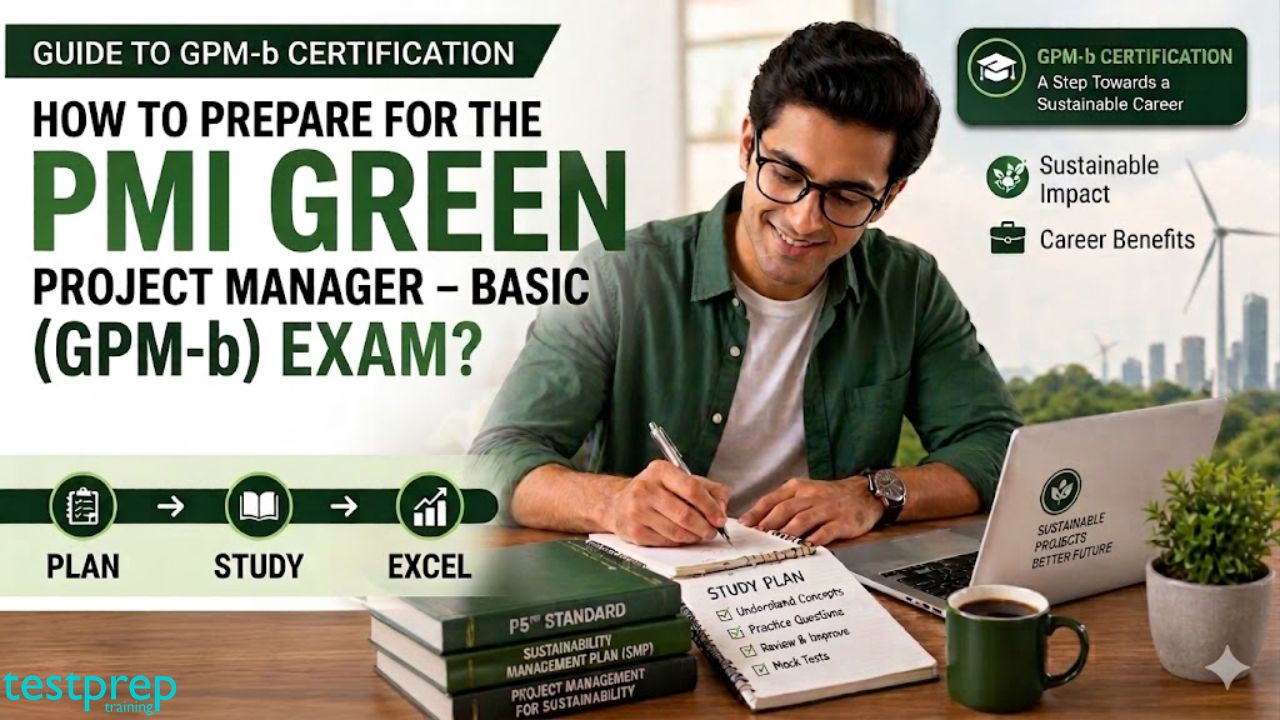
The PMI Green Project Manager – Basic (GPM-b) Exam reflects a major shift in how project management is practiced today—where sustainability is no longer optional, but essential. Organizations across industries are increasingly expected to deliver projects that not only meet business objectives but also minimize environmental impact, promote social responsibility, and support long-term economic value. As a result, professionals who understand how to integrate sustainability into project workflows are becoming highly valuable in the global job market.
This evolution has elevated the role of sustainable project management, where traditional constraints like scope, time, and cost are balanced with critical sustainability factors such as resource efficiency, stakeholder well-being, and ethical governance. Companies are actively aligning their projects with global sustainability goals, creating a strong demand for certified professionals who can lead these initiatives effectively.
The certification is designed to meet this demand by providing a structured foundation in sustainable project practices. It introduces key frameworks like the P5 Standard (People, Planet, Prosperity, Process, Product) and focuses on integrating environmental, social, and governance (ESG) principles into every phase of a project lifecycle.
Whether you are a project manager, a student, or a professional exploring sustainability-focused roles, preparing for this exam is a strategic move toward building future-ready skills. In this guide, you’ll learn how to approach your preparation effectively, understand the exam structure, and develop the knowledge needed to succeed in the GPM-b exam with confidence.
What is the PMI Green Project Manager – Basic (GPM-b) Certification?
The PMI Green Project Manager – Basic (GPM-b) certification is an entry-level credential that validates a candidate’s understanding of sustainable project management principles. It is structured to equip professionals with the knowledge required to incorporate sustainability into project planning, execution, and evaluation, without requiring advanced prior experience in sustainability practices.
At its core, the certification is based on globally recognized sustainability frameworks referenced in the official exam content outline and training resources. One of the most important among these is the P5 Standard, which expands the traditional project management approach by introducing five critical dimensions: People, Planet, Prosperity, Process, and Product. These dimensions enable project managers to evaluate not only project performance but also its broader impact on society and the environment.
Purpose and Practical Relevance
The GPM-b certification is not purely theoretical; it is designed with practical application in mind. It focuses on helping professionals understand how sustainability can be embedded into real-world project scenarios. This includes identifying environmental risks, assessing social impact, and developing strategies that align project outcomes with organizational sustainability objectives.
A key aspect of the certification is its emphasis on Sustainability Management Planning (SMP). Candidates learn how to create structured plans that incorporate sustainability considerations into every stage of the project lifecycle. This ensures that sustainability is not treated as an afterthought but as an integral component of decision-making and execution.
Core Learning Focus Areas
The certification framework introduces candidates to a set of interconnected concepts that form the foundation of sustainable project management. These include understanding sustainability principles, applying impact analysis techniques, and integrating ethical and governance considerations into project workflows.
Another important area is the alignment of projects with global sustainability initiatives and organizational ESG goals. This ensures that certified professionals can contribute to broader strategic objectives while maintaining project efficiency. The learning approach is designed to move beyond memorization, encouraging candidates to apply concepts in scenario-based contexts, which is also reflected in the exam structure.
Who Should Consider the GPM-b Certification?
The PMI Green Project Manager – Basic (GPM-b) certification is suitable for a wide range of individuals, including early-career project managers, students, and professionals transitioning into sustainability-focused roles. It also serves as a valuable addition for experienced project managers who want to expand their expertise into sustainable practices without immediately pursuing advanced-level certifications.
Because it builds on general project management knowledge while introducing sustainability-specific concepts, the certification acts as a strong foundation for those aiming to work on environmentally and socially responsible projects across industries.
Positioning Within the Certification Landscape
Within the broader ecosystem of project management certifications, the GPM-b credential occupies a unique position. While certifications like PMP or PRINCE2 focus on project delivery methodologies, GPM-b complements them by adding a sustainability dimension. This makes it particularly valuable for professionals looking to differentiate themselves in a competitive job market where sustainability is becoming a key hiring criterion. It also aligns closely with the evolving expectations outlined in global standards and frameworks, ensuring that certified individuals are prepared to handle modern project challenges that go beyond traditional performance metrics.
Rather than being just another certification, the GPM-b serves as a mindset shift. It encourages professionals to think beyond immediate project outputs and consider long-term impacts, resource efficiency, and stakeholder value. By introducing structured frameworks and practical tools, it enables candidates to approach projects with a more holistic and responsible perspective—an approach that is increasingly essential in today’s project-driven world.
GPM-b Exam Overview
A clear understanding of the exam structure is essential for building an effective preparation strategy. The PMI Green Project Manager – Basic (GPM-b) Exam is designed to assess not only theoretical knowledge but also the ability to apply sustainability principles within real-world project scenarios. Rather than focusing on rote memorization, the exam emphasizes practical understanding, alignment with sustainability frameworks, and the integration of responsible project management practices.
However, the PMI Green Project Manager – Basic (GPM-b) Exam follows a structured format that reflects its dual focus on sustainability concepts and project delivery methods. According to the official exam content outline and preparation resources, the exam consists of multiple-choice questions designed to evaluate both conceptual clarity and applied knowledge.
Candidates are required to complete 75 questions within a 90-minute timeframe, making time management a critical factor during the test. The questions are not purely definition-based; instead, many are scenario-driven, requiring candidates to interpret situations and apply sustainability principles appropriately. This approach ensures that certified professionals can translate theoretical knowledge into practical decision-making.
Question Distribution and Focus Areas
The exam is divided into two primary areas that define its overall structure. A significant portion of the questions focuses on sustainability methods, which form the core of the certification. These questions assess a candidate’s understanding of sustainability principles, impact analysis, and the application of frameworks such as the P5 Standard in project environments.
The remaining portion evaluates knowledge of delivery methods, ensuring that candidates can integrate sustainability into different project management approaches. This includes understanding how sustainable practices align with both traditional and adaptive (Agile) project delivery models. This balanced distribution reflects the certification’s objective: to produce professionals who are not only aware of sustainability concepts but also capable of implementing them effectively within diverse project settings.
Nature of Questions and Assessment Approach
One of the distinguishing features of the GPM-b exam is its emphasis on application-based learning. Instead of relying heavily on direct theoretical questions, the exam often presents practical scenarios that require analytical thinking. Candidates may be asked to identify the most sustainable course of action, evaluate project impacts, or select appropriate strategies based on given conditions.
This assessment approach aligns with the real-world expectations of sustainable project management, where decisions must consider environmental, social, and economic factors simultaneously. As a result, candidates who focus on understanding concepts in context—rather than memorizing definitions—tend to perform better.

Difficulty Level and Candidate Expectations
The PMI Green Project Manager – Basic (GPM-b) exam is considered an entry-level certification, but it should not be underestimated. While it does not require deep technical expertise, it demands a solid grasp of sustainability concepts and their practical application. Candidates are expected to demonstrate awareness of key frameworks, ethical considerations, and the ability to incorporate sustainability into project workflows.
The level of difficulty is best described as moderate, particularly for individuals who already have a background in project management. However, for those new to sustainability, the exam may require additional effort to fully understand concepts such as impact analysis, sustainability metrics, and governance practices.
Certification Validity and Professional Value
Upon successfully passing the exam, candidates earn a certification that remains valid for five years, reflecting its relevance in a rapidly evolving field. This validity period underscores the importance of staying updated with sustainability practices, as standards and expectations continue to evolve globally.
The certification not only validates foundational knowledge but also signals a professional’s commitment to responsible project management. It enhances credibility in roles where sustainability is a priority and supports career growth in industries that are increasingly adopting environmentally and socially conscious practices.
PMI GPM-b Exam Eligibility Criteria
Understanding the eligibility requirements for the PMI Green Project Manager – Basic (GPM-b) Exam is a critical first step before beginning your preparation. While the certification is positioned as a foundational-level credential in sustainable project management, it is designed for individuals who already possess a certain level of project management knowledge or structured academic exposure. This ensures that candidates can effectively focus on sustainability integration rather than learning project management fundamentals from scratch.
The eligibility framework for the PMI Green Project Manager – Basic (GPM-b) certification is structured around two key components: project management knowledge (or academic qualification) and formal sustainability education. Both elements must be satisfied at the time of application, as outlined in the official exam content document.
1. Project Management Knowledge or Academic Qualification
To be eligible, candidates must demonstrate prior exposure to project management through either a recognized certification or a relevant academic degree. The exam is intentionally designed with fewer questions on basic project management concepts, which is why this prerequisite is mandatory. Candidates must meet at least one of the following:
- Hold a globally recognized project management certification such as CAPM, PMP, PgMP, or PfMP
- Possess equivalent certifications from recognized bodies, including PRINCE2, IPMA Levels (A–D), APM, AIPM, or AACEI
- Hold a Master’s degree in:
- Project or Program Management
- Sustainability or Sustainable Development (with project management focus)
- Business Administration (with project management concentration)
- Engineering (with project management concentration)
2. Mandatory Sustainability Education Requirement
In addition to prior knowledge, candidates must complete a minimum of 12 hours of formal education in Sustainable Project Management before submitting their application.
This is a crucial requirement that was often overlooked but is explicitly stated in the official document. The purpose of this training is to standardize the candidate’s understanding of sustainability concepts, ensuring alignment with the frameworks used in the exam. Accepted learning pathways include:
- PMI’s Sustainable Project Management for Certified Practitioners course
- Equivalent training delivered by an Authorized Training Partner (ATP)
Importantly, this education must be completed prior to application submission, not after registration.
3. Combined Requirement Structure
Unlike many certifications that separate eligibility into optional pathways, the GPM-b follows a combined requirement model. This means:
- You must have either a certification or a relevant master’s degree,
AND - You must complete 12 hours of sustainability-focused training
This dual requirement ensures that all candidates enter the exam with both:
- A solid project management foundation
- A standardized understanding of sustainability practices
4. Important Clarification for Beginners
One key point that often creates confusion is the perception that the GPM-b is completely beginner-friendly with no prerequisites. While some training bundles may simplify access, the official exam content outline clearly indicates that a qualifying degree/certification plus sustainability education is required for eligibility.
This distinction is important for students and early-career professionals. If you do not yet meet the project management qualification requirement, you may need to first pursue a foundational certification (such as CAPM) or relevant academic pathway before applying for PMI Green Project Manager – Basic (GPM-b).
5. Why the Eligibility Criteria Are Structured This Way
The eligibility model reflects the certification’s intent—to build sustainability expertise on top of existing project management knowledge. By ensuring candidates already understand project workflows, PMI can focus the exam on higher-value competencies such as:
- Sustainability impact assessment
- Ethical and responsible decision-making
- Integration of social and environmental considerations into project planning
This approach maintains the professional credibility of the certification while ensuring that successful candidates are capable of applying sustainability principles in real-world project environments.
Understanding the Exam Content Outline
For any certification exam, the most reliable source of truth is the official Exam Content Outline (ECO). When preparing for the PMI Green Project Manager – Basic (GPM-b) Exam, the ECO is not just a reference—it defines exactly what you will be tested on and how your knowledge will be evaluated. A clear understanding of its structure, especially the domains, allows you to move beyond generic preparation and focus on what truly matters for success.
The ECO organizes the entire syllabus into structured domains that reflect how sustainable project management is practiced in real-world environments. Instead of listing disconnected topics, it groups related competencies into broader areas of responsibility. This ensures that candidates are assessed on their ability to apply knowledge holistically rather than in isolation.
At the core of the GPM-b ECO are two primary domains: Sustainability Methods and Delivery Methods. Each domain plays a distinct role in shaping your understanding of sustainable project management, and together they form a complete framework for both knowledge and application.
Domain 1: Sustainability Methods (Core Focus Area)
The Sustainability Methods domain represents the foundation of the GPM-b certification and carries the majority of the exam weight. This domain is designed to evaluate how well you understand sustainability as a concept and how effectively you can integrate it into project environments.
- At its core, this domain focuses on the principles that define sustainable project management. It introduces candidates to frameworks such as the P5 Standard, which expands traditional project thinking by incorporating environmental, social, and economic dimensions. Rather than viewing a project purely in terms of deliverables, this domain encourages you to assess its broader impact on people, the planet, and long-term prosperity.
- A significant portion of this domain revolves around impact analysis. Candidates are expected to evaluate how project activities influence various sustainability factors, including resource consumption, environmental footprint, and stakeholder well-being. This requires a shift in thinking—from short-term efficiency to long-term responsibility.
- Another critical aspect is the development and application of Sustainability Management Plans (SMPs). These plans act as structured tools that guide how sustainability considerations are embedded throughout the project lifecycle. Understanding how to design, implement, and monitor such plans is essential for performing well in this domain.
- The domain also emphasizes governance and ethical responsibility, ensuring that project decisions are transparent, accountable, and aligned with organizational and societal expectations. This includes stakeholder engagement, compliance considerations, and responsible leadership practices. Overall, Sustainability Methods is not just about knowing definitions—it is about understanding how to think, evaluate, and make decisions through a sustainability lens.
Domain 2: Delivery Methods (Application in Project Execution)
While Sustainability Methods provides the conceptual foundation, the Delivery Methods domain focuses on how those concepts are applied within actual project execution. This domain ensures that candidates can translate sustainability principles into actionable strategies within different project management approaches.
- One of the key aspects of this domain is understanding how sustainability aligns with various delivery frameworks, including predictive (traditional) and adaptive (Agile) methodologies. Candidates are expected to recognize that sustainability is not limited to a specific approach—it must be integrated regardless of the project delivery model being used.
- This domain also explores how sustainability considerations influence planning, execution, and monitoring activities. For example, candidates may need to evaluate how resource optimization, risk management, or stakeholder communication strategies can be adapted to support sustainable outcomes.
- Another important focus is the practical integration of sustainability into workflows. This includes aligning sustainability goals with project objectives, ensuring that teams are aware of sustainability priorities, and maintaining consistency between planning and execution phases.
- Unlike the first domain, which is more conceptual, Delivery Methods is highly situational. It tests your ability to apply knowledge in context—making decisions that balance project constraints with sustainability objectives in real-world scenarios.
How the Domains Work Together
The two domains are designed to complement each other rather than function independently. Sustainability Methods provides the “what” and “why” of sustainable project management, while Delivery Methods focuses on the “how.” A candidate who only understands sustainability concepts without knowing how to apply them in project execution will struggle in scenario-based questions.
Similarly, someone who is familiar with project delivery techniques but lacks sustainability awareness will miss the broader intent of the certification. The exam is structured to ensure that you can connect both domains—demonstrating not only knowledge but also the ability to implement that knowledge effectively in practical situations.
Key Topics You Must Master for the GPM-b Exam
A successful preparation strategy for the PMI Green Project Manager – Basic (GPM-b) Exam goes beyond understanding the exam format—it requires a deep grasp of the key concepts that form the backbone of sustainable project management. The official exam content outline emphasizes not just awareness, but the ability to interpret, apply, and evaluate sustainability principles within real project environments.
Rather than treating the syllabus as a collection of isolated topics, candidates should approach it as an interconnected framework where each concept supports decision-making, planning, and execution. Mastering the following core areas will help you build both conceptual clarity and practical confidence for the exam.
1. Sustainability Foundations and Global Context
At the heart of the GPM-b certification lies a strong emphasis on sustainability as a strategic and operational priority. Candidates are expected to understand the broader context in which sustainable project management operates, including environmental responsibility, social equity, and economic viability.
This includes familiarity with global sustainability initiatives and how organizations align their projects with long-term environmental and social goals. Understanding this context is essential because many exam scenarios are framed around balancing business objectives with sustainability considerations. The ability to recognize trade-offs and evaluate long-term impacts is a key differentiator in performance.
2. The P5 Standard Framework
One of the most critical frameworks referenced in the official resources is the P5 Standard, which expands traditional project management by introducing five dimensions: People, Planet, Prosperity, Process, and Product. Mastering this framework requires more than memorizing its components. You should be able to interpret how each dimension influences project outcomes and how they interact with one another.
For example, decisions that improve efficiency (Process) should also be evaluated for their environmental impact (Planet) and stakeholder well-being (People). The P5 Standard serves as a lens through which project decisions are analyzed, making it central to both conceptual questions and scenario-based assessments in the exam.
3. Sustainability Integration Across the Project Lifecycle
A key expectation in the GPM-b exam is the ability to integrate sustainability into every phase of the project lifecycle. This includes initiation, planning, execution, monitoring, and closure. Candidates should understand how sustainability considerations evolve at each stage. For instance, during planning, sustainability goals and metrics must be clearly defined, while during execution, these goals need to be actively monitored and managed.
By the time the project reaches closure, evaluating its overall sustainability impact becomes essential. This lifecycle perspective ensures that sustainability is not treated as a one-time activity but as a continuous process embedded within project management practices.
4. Impact Analysis and Measurement
Impact analysis is one of the most practical and heavily emphasized areas in the exam. It involves assessing how project activities affect environmental, social, and economic systems. Candidates should be comfortable evaluating both positive and negative impacts, identifying risks, and proposing mitigation strategies.
This includes understanding how to measure sustainability performance using appropriate indicators and metrics. The ability to interpret impact data and make informed decisions based on it is critical, as many exam questions are designed to test analytical thinking rather than theoretical recall.
5. Sustainability Management Planning (SMP)
Another essential topic is the development and use of Sustainability Management Plans (SMPs). These plans provide a structured approach to embedding sustainability into project workflows. Candidates should understand the purpose, components, and practical application of SMPs. This includes defining sustainability objectives, aligning them with project goals, and ensuring that they are consistently implemented and monitored throughout the project lifecycle. The SMP acts as a bridge between strategy and execution, making it a key tool in sustainable project management and a recurring concept in the exam.
6. Governance, Ethics, and Stakeholder Engagement
Sustainable project management is closely tied to ethical decision-making and responsible governance. The exam expects candidates to demonstrate an understanding of how transparency, accountability, and stakeholder engagement influence project outcomes.
This includes recognizing the importance of involving stakeholders in sustainability discussions, addressing their concerns, and ensuring that project decisions align with ethical standards. Governance frameworks help ensure that sustainability commitments are not only defined but also enforced throughout the project.
7. Delivery Approaches in Sustainable Projects
In addition to sustainability concepts, candidates must understand how these principles are applied within different project delivery approaches. This includes both traditional (predictive) and Agile methodologies.
The focus here is on adaptability—how sustainability practices can be integrated regardless of the delivery model. For example, in Agile environments, sustainability considerations may need to be incorporated into iterative cycles, while in traditional approaches, they are embedded within structured planning and execution phases. Understanding this flexibility is important, as it reflects real-world project environments where different methodologies are used based on project needs.
8. Building Conceptual Depth Over Memorization
A recurring theme across all key topics is the emphasis on conceptual understanding rather than memorization. The GPM-b exam is designed to test your ability to apply knowledge in practical scenarios, which requires a deeper level of comprehension.
Instead of focusing solely on definitions, candidates should aim to understand how concepts connect and influence decision-making. This approach not only improves exam performance but also ensures that the knowledge gained is applicable in professional settings.
Step-by-Step Study Plan For PMI GPM-b Exam
Preparing for the PMI Green Project Manager – Basic (GPM-b) Exam requires more than covering topics—it demands a structured, intentional approach aligned with the official Exam Content Outline (ECO) and sustainability frameworks referenced by PMI. A well-designed study plan helps you move systematically from foundational understanding to application, ensuring that you are not only exam-ready but also capable of applying sustainable project management principles in real-world scenarios.
The following step-by-step plan is designed to help you organize your preparation efficiently, avoid common pitfalls, and build confidence as you progress.
Step 1: Decode the Exam Content Outline First
Your preparation should begin with a thorough review of the official exam content outline document. This step is often underestimated, yet it is the most important because it defines the exact scope of the exam. Instead of reading it passively, analyze how the content is distributed across Sustainability Methods and Delivery Methods. Identify which areas carry more weight and require a deeper understanding.
This allows you to prioritize your study efforts strategically rather than treating all topics equally. At this stage, your goal is not to master concepts but to gain clarity on what to study and why it matters.
Step 2: Build a Strong Conceptual Foundation
Once you understand the structure of the exam, the next step is to develop a solid foundation in key sustainability concepts. This includes frameworks such as the P5 Standard, sustainability principles, and impact analysis techniques referenced in the official materials.
Rather than relying on fragmented resources, focus on structured learning—preferably through PMI-recommended training or aligned courses. This ensures that your understanding is consistent with the frameworks used in the exam. At this stage, avoid rushing. A clear conceptual base will significantly reduce confusion when you move to application-based questions later.
Step 3: Complete the Required Sustainability Education
As outlined in the official eligibility requirements, completing formal training in sustainable project management (minimum 12 hours) is not just mandatory but also highly beneficial for preparation. This training introduces you to standardized terminology, methodologies, and tools such as Sustainability Management Plans (SMPs).
It also helps bridge the gap between traditional project management knowledge and sustainability-focused practices. Treat this step as a guided learning phase, where you align your understanding with PMI’s expectations rather than relying solely on self-study.
Step 4: Connect Concepts to Real-World Application
After building foundational knowledge, shift your focus toward applying concepts in practical scenarios. The GPM-b exam emphasizes decision-making, not memorization, so this transition is critical.
Start analyzing how sustainability principles influence project decisions across different stages of the lifecycle. For example, consider how impact analysis affects planning or how stakeholder engagement shapes sustainability outcomes. This stage helps you develop analytical thinking, which is essential for handling scenario-based questions in the exam.
Step 5: Practice with Scenario-Based Questions
Practice is where your preparation becomes exam-oriented. Use mock tests and practice questions that reflect the structure and difficulty level outlined in the exam outline. Focus on understanding the reasoning behind each answer rather than just identifying the correct option. This will help you recognize patterns in how questions are framed and how sustainability concepts are tested. Consistent practice also improves time management, which is crucial given the limited duration of the exam.
Step 6: Identify and Strengthen Weak Areas
As you progress through practice tests, you will begin to notice patterns in your performance. Some areas may feel intuitive, while others may require additional attention. Use this insight to refine your study plan.
Revisit the exam outline and map your weak areas to specific domains or competencies. Then, reinforce those areas using targeted study materials and additional practice. This iterative approach ensures continuous improvement and prevents knowledge gaps from affecting your final performance.

Step 7: Revise Key Frameworks and Concepts
In the final phase of your preparation, focus on revising the most important frameworks and concepts. This includes the P5 Standard, sustainability integration across the project lifecycle, impact analysis methods, and governance principles.
The goal here is not to learn new topics but to consolidate your understanding. Revisiting these concepts helps reinforce connections between topics and improves recall during the exam. Structured revision also ensures that you approach the exam with clarity rather than confusion.
Step 8: Develop an Exam Strategy
Beyond knowledge, your performance will also depend on how effectively you manage the exam itself. Develop a clear strategy for time allocation, question handling, and review. Practice answering questions within a time limit to simulate real exam conditions. Learn to identify questions that require more time and those that can be answered quickly.
This balance is essential for completing all questions within the given timeframe. Furthermore, a well-defined strategy reduces stress and allows you to focus entirely on applying your knowledge during the exam.
| Focus Area | What You Should Do | Outcome |
|---|---|---|
| Understand Exam Content Outline | Analyze domains (Sustainability vs Delivery), weightage, and scope | Clear exam direction and priorities |
| Build Foundation | Study core concepts like P5 Standard, sustainability principles, impact analysis | Strong conceptual clarity |
| Complete Training | Finish 12-hour sustainability education (PMI/ATP aligned) | Standardized understanding of frameworks |
| Apply Concepts | Relate concepts to real-world project scenarios and lifecycle stages | Improved analytical thinking |
| Practice Questions | Solve scenario-based MCQs and mock tests regularly | Exam readiness and time management |
| Identify Weak Areas | Analyze mistakes and revisit ECO-mapped topics | Targeted improvement |
| Revise Key Topics | Focus on frameworks (P5, SMP, governance, lifecycle integration) | Strong retention and recall |
| Exam Strategy | Practice under timed conditions and refine answering approach | Confidence and performance optimization |
PMI Green Project Manager – Basic Exam Best Study Resources
Selecting the right study resources is a decisive factor in preparing effectively for the PMI Green Project Manager – Basic (GPM-b) Exam. With sustainability being a relatively specialized domain within project management, relying on generic materials often leads to incomplete or misaligned preparation. The most effective approach is to combine official PMI-aligned content with practice-oriented resources, ensuring both conceptual clarity and exam readiness.
A well-balanced resource strategy should not overwhelm you with excessive material but instead focus on quality, relevance, and alignment with the official Exam Content Outline (ECO).
1. Official PMI-Aligned Resources
The most reliable starting point for your preparation is the set of resources provided or referenced by PMI. These materials are directly aligned with the exam structure and ensure that your understanding matches the expectations of the certification. The official GPM-b certification page and the Exam Content Outline (ECO) should be treated as foundational documents. The ECO, in particular, defines the domains, competencies, and scope of the exam, making it essential for structuring your preparation.
In addition to documentation, PMI recommends formal training programs such as the Sustainable Project Management for Certified Practitioners course. This training is not only part of the eligibility requirement but also serves as a structured learning pathway that introduces key frameworks like the P5 Standard, sustainability impact analysis, and Sustainability Management Planning (SMP). Using official resources ensures accuracy and helps you avoid common issues such as outdated concepts or misinterpreted frameworks.
2. Core Framework and Reference Materials
Beyond official documentation, candidates should focus on mastering the frameworks that underpin the certification. One of the most important among these is the P5 Standard, which forms the conceptual backbone of sustainable project management within the GPM-b syllabus.
Studying these frameworks in depth allows you to understand how sustainability is evaluated across dimensions such as people, planet, and prosperity, along with process and product considerations. These materials are especially useful for developing the analytical perspective required to answer scenario-based questions.
Rather than treating these frameworks as theoretical models, you should aim to understand how they are applied in practical project environments. This approach significantly improves both comprehension and retention.
3. Practice-Based Learning Platforms
While conceptual understanding is essential, practice plays an equally important role in exam preparation. Online platforms that provide scenario-based practice questions and mock exams can help you simulate the actual test environment. Resources such as structured practice tutorials and mock tests—like those available through platforms similar to TestPrepTraining—offer exposure to the type of questions you are likely to encounter. These platforms are particularly valuable for:
- Understanding question patterns
- Improving time management
- Identifying knowledge gaps
When using such resources, focus on the explanation behind each answer. The goal is not just to get the correct option but to understand the reasoning, which aligns with the application-based nature of the GPM-b exam.
4. Supplementary Learning Resources
To strengthen your preparation, you can also incorporate supplementary materials that expand your understanding of sustainability and project management integration. These may include:
- Study notes and summarized guides based on the ECO
- Flashcards for quick revision of key frameworks and terminology
- Case studies demonstrating real-world sustainable project implementations
These resources are particularly useful during revision phases, helping reinforce concepts without requiring you to revisit full-length materials. However, it is important to ensure that any supplementary content you use remains consistent with PMI’s frameworks and terminology to avoid confusion during the exam.
How to Choose the Right Combination
Not all resources need to be used simultaneously. The key is to build a layered approach:
- Start with official PMI resources for accuracy and structure
- Move to framework-focused materials for conceptual depth
- Integrate practice platforms for application and exam readiness
- Use supplementary resources for revision and reinforcement
GPM-b Exam: Common Mistakes vs Exam Day Strategy
| Area | Common Mistakes to Avoid | Recommended Exam Day Strategy |
|---|---|---|
| Understanding Concepts | Relying on memorization instead of understanding sustainability frameworks | Focus on interpreting questions and applying concepts logically |
| Exam Content Outline Alignment | Ignoring the Exam Content Outline and studying random topics | Mentally map questions to domains (Sustainability vs Delivery) while answering |
| Time Management | Spending too much time on difficult questions | Allocate ~1–1.2 minutes per question and move on if stuck |
| Question Approach | Not reading scenarios carefully and missing key details | Read each question twice and identify keywords related to sustainability impact |
| Answer Selection | Choosing the first “seems correct” option without evaluation | Use elimination technique to narrow down the best possible answer |
| Practice Level | Skipping mock tests or not analyzing mistakes | Trust your practice experience and apply learned patterns confidently |
| Framework Application | Weak understanding of P5 Standard and SMP concepts | Apply frameworks logically when evaluating scenario-based questions |
| Stress Handling | Panicking under time pressure or overthinking answers | Stay calm, maintain steady pace, and avoid second-guessing correct answers |
| Revision Gaps | Not revising key concepts before exam | Quickly recall key frameworks and concepts before starting |
| Final Review | Not reviewing flagged questions or rushing submission | Use remaining time to review marked questions carefully |
Benefits of PMI Green Project Manager – Basic (GPM-b) Certification
As sustainability becomes a central priority for organizations worldwide, certifications that validate expertise in this area are gaining significant importance. The PMI Green Project Manager – Basic (GPM-b) certification is designed to equip professionals with the knowledge and perspective required to integrate sustainability into project environments. Beyond serving as a credential, it reflects a shift in how project success is defined—moving from short-term outputs to long-term environmental, social, and economic impact.
Understanding the benefits of this certification helps candidates evaluate its relevance to their career goals and the evolving demands of the global job market.
1. Strengthening Career Relevance in a Sustainability-Driven Market
One of the most immediate benefits of the GPM-b certification is its alignment with current industry trends. Organizations across sectors are increasingly incorporating sustainability into their strategies, driven by regulatory expectations, stakeholder demands, and global sustainability initiatives.
Holding this certification demonstrates that you are equipped to contribute to these priorities. It positions you as a professional who understands how to balance project objectives with sustainability considerations—an ability that is becoming a key differentiator in hiring and career advancement.
2. Expanding Your Project Management Skill Set
The GPM-b certification enhances traditional project management knowledge by introducing a sustainability-focused perspective. While standard methodologies emphasize scope, cost, and time, this certification expands the scope to include environmental impact, social responsibility, and long-term value creation.
This broader skill set allows professionals to approach projects more strategically. It enables better decision-making, particularly in scenarios where trade-offs between efficiency and sustainability must be evaluated. As a result, certified individuals are better prepared to handle complex, real-world project challenges.
3. Building Expertise in Globally Recognized Frameworks
A key advantage of the certification is its focus on structured frameworks such as the P5 Standard and Sustainability Management Planning (SMP). These frameworks are referenced in official PMI resources and provide a systematic way to assess and manage sustainability within projects.
By mastering these frameworks, candidates gain practical tools that can be applied across industries. This not only improves exam performance but also enhances professional capability, making it easier to implement sustainability initiatives in actual project environments.
4. Enhancing Credibility and Professional Recognition
Certifications from recognized organizations carry significant weight, and the GPM-b is no exception. As part of the broader PMI ecosystem, it adds credibility to your professional profile and signals a commitment to continuous learning and responsible project management practices.
For employers, this certification serves as evidence that a candidate understands both project management fundamentals and sustainability integration. This dual competency is increasingly valued in roles that involve strategic planning, operations, and sustainability initiatives.
5. Supporting Transition into Sustainability-Focused Roles
For professionals looking to move into sustainability-related roles, the GPM-b certification provides a structured entry point. It bridges the gap between general project management experience and the specialized knowledge required for sustainability initiatives.
This makes it particularly valuable for individuals aiming to work in areas such as environmental projects, corporate sustainability programs, or ESG-focused roles. The certification helps demonstrate readiness for such transitions without requiring extensive prior experience in sustainability.
6. Aligning with Global Sustainability Goals
The certification is aligned with broader global efforts to promote sustainable development. It encourages professionals to consider how projects contribute to long-term environmental and social outcomes, rather than focusing solely on immediate deliverables.
This alignment ensures that certified individuals are prepared to work in environments where sustainability is integrated into organizational strategy. It also supports a mindset shift—encouraging professionals to think beyond traditional metrics and consider the broader impact of their work.
7. Long-Term Professional Value
With a validity period of five years, the GPM-b certification offers sustained value in a rapidly evolving field. As sustainability continues to gain importance, professionals with verified knowledge in this area are likely to remain in demand.
More importantly, the certification provides a foundation for continuous growth. It can serve as a stepping stone toward advanced certifications or deeper specialization in sustainable project management, allowing professionals to build expertise over time.
Conclusion
Preparing for the PMI Green Project Manager – Basic (GPM-b) Exam is more than an academic exercise—it is an opportunity to develop a forward-looking approach to project management. As organizations increasingly prioritize sustainability, professionals are expected to deliver results that extend beyond traditional metrics and contribute to long-term environmental and social value.
Throughout this guide, we have explored the structure of the exam, the importance of the Exam Content Outline, key concepts such as the P5 Standard and Sustainability Management Planning, and a structured approach to preparation. When combined with the right study resources and a disciplined strategy, these elements provide a clear pathway toward success.
What sets this certification apart is its ability to reshape how you think about projects. It encourages a balanced perspective where efficiency, responsibility, and impact coexist. By focusing on understanding rather than memorization, and by applying concepts in practical scenarios, you position yourself not only to pass the exam but also to contribute meaningfully in real-world project environments.
As you move forward, treat your preparation as a process of building capability rather than simply achieving certification. With the right approach, the GPM-b can become a strong foundation for a career that aligns with the future of sustainable and responsible project management.
